Thai Elephant vs African Elephant: What Makes Them Different?
Elephants are among the most fascinating animals on Earth, admired for their intelligence, strength, and deep social bonds. While all elephants share many characteristics, there are significant differences between the Thai elephant, also known as the Asian elephant, and the African elephant. Understanding these distinctions helps visitors appreciate the unique qualities of each species and the importance of protecting them.
Size and Appearance
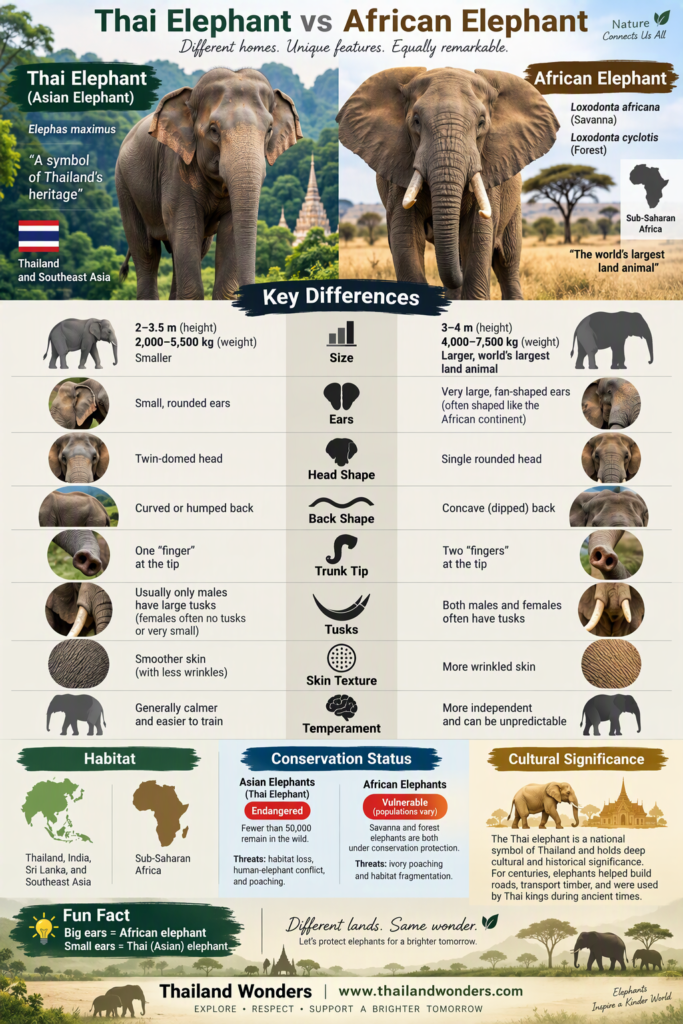
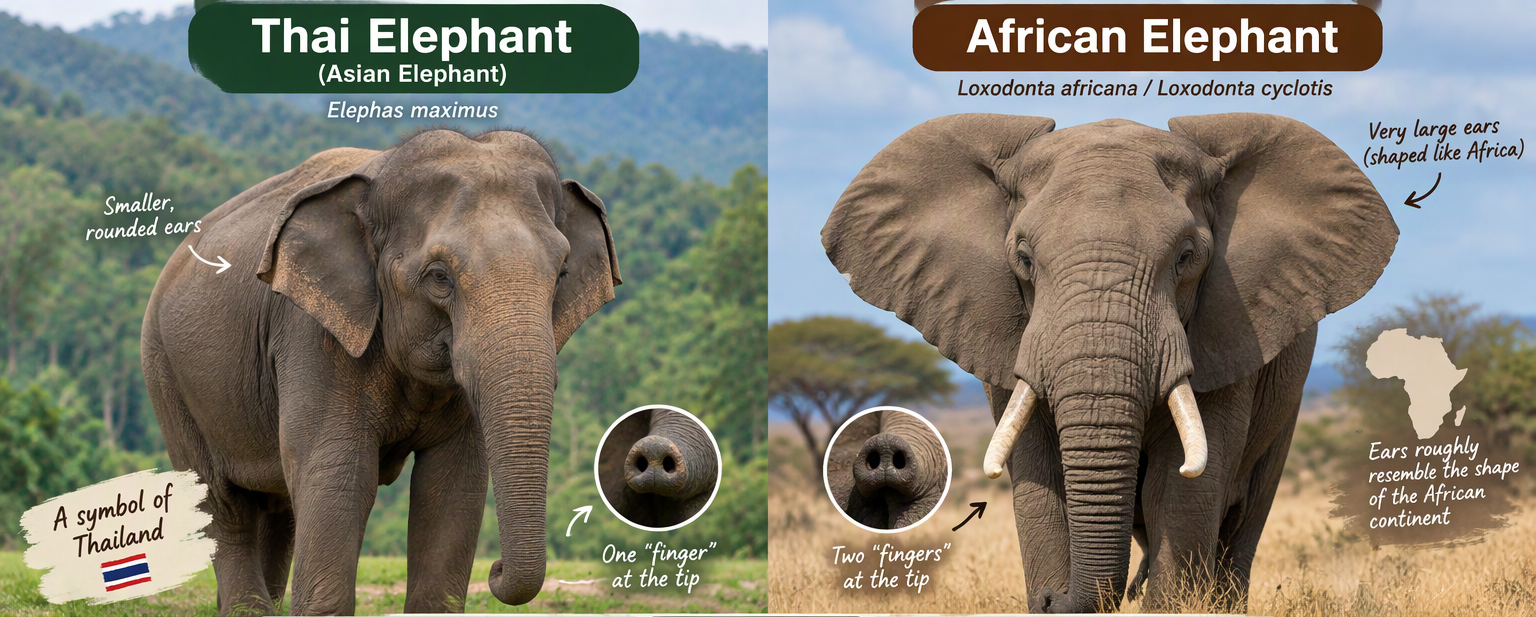
One of the easiest ways to tell the difference between a Thai elephant and an African elephant is by looking at their ears. African elephants have enormous ears shaped somewhat like the African continent, while Thai elephants have much smaller, rounded ears.
African elephants are also larger overall. They can reach heights of up to 4 meters and weigh as much as 7,500 kilograms, making them the largest land animals on the planet. Thai elephants are smaller, typically standing between 2 and 3.5 meters tall and weighing up to 5,500 kilograms.
Head, Back, and Trunk Differences
Thai elephants have a distinctive twin-domed forehead, giving their heads a rounded and unique appearance. African elephants usually have a single rounded head shape.
Their backs are different as well. Thai elephants often have a curved or slightly humped back, while African elephants have a more concave or dipped back.
Another important feature is the trunk tip. Thai elephants have one finger-like projection at the end of their trunk, whereas African elephants have two. These adaptations help them grasp food and objects efficiently in their natural habitats.
Tusks and Skin
Not all Thai elephants have visible tusks. In many cases, only males develop large tusks, while females may have very small tusks or none at all. In contrast, both male and female African elephants commonly grow tusks.
African elephants also tend to have more wrinkled skin, which helps them stay cool in the hot African climate. Thai elephants generally have smoother skin with fewer wrinkles.
Habitat and Distribution
Thai elephants are found across Thailand and other parts of Southeast Asia, including India and Sri Lanka. They inhabit tropical forests, grasslands, and protected wildlife areas.
African elephants live throughout various regions of Sub-Saharan Africa, ranging from open savannas to dense forests. Their habitats are often much larger and more diverse than those of Asian elephants.
Cultural Importance of Thai Elephants
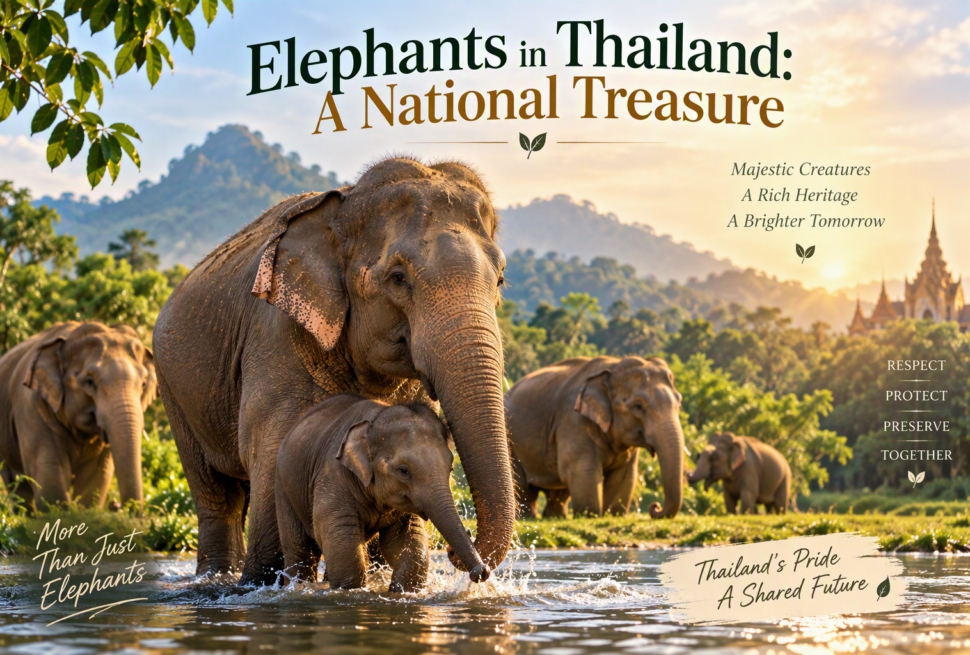
The Thai elephant holds a special place in Thailand’s history and culture. For centuries, elephants played essential roles in transportation, agriculture, construction, and even royal ceremonies. Today, they remain one of Thailand’s most treasured national symbols.
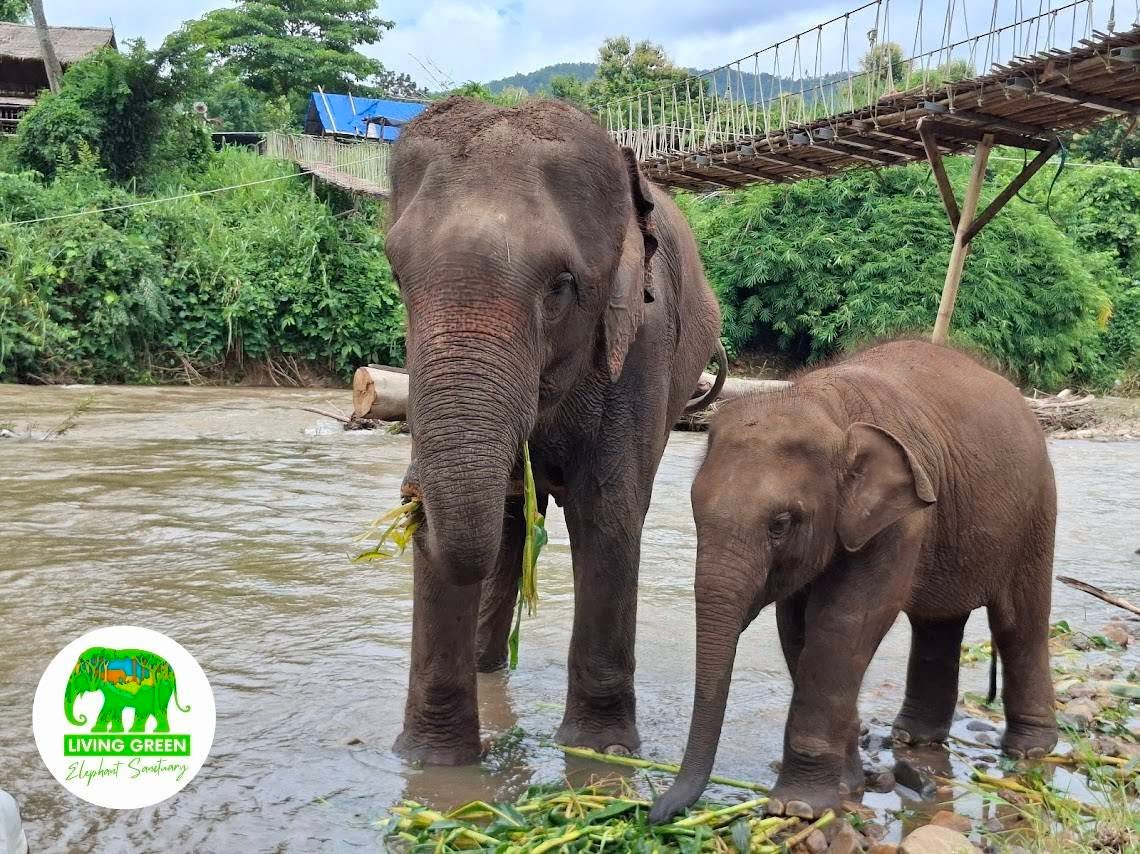
Visitors to ethical elephant sanctuaries can learn about elephant conservation while observing these gentle giants in a respectful and natural environment.
Conservation Challenges
Both Thai and African elephants face serious threats, including habitat loss, human-wildlife conflict, and poaching. Conservation programs, wildlife sanctuaries, and responsible tourism initiatives are helping protect these magnificent animals for future generations.
Supporting ethical elephant experiences is one of the best ways travelers can contribute to elephant welfare and conservation.
Conclusion
Although Thai and African elephants share many similarities, their size, appearance, habitat, and cultural significance make each species unique. Whether exploring Thailand’s lush countryside or Africa’s vast savannas, encountering elephants is an unforgettable experience that inspires admiration and a deeper appreciation for wildlife conservation.
Thailand Wonders |www.thailandwonders.com